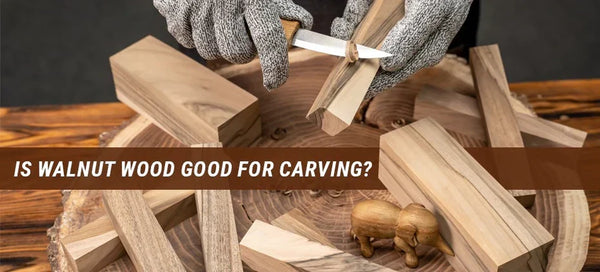
Is basswood good for carving? Yes. Its relatively soft structure and fine, even texture make it a practical choice for whittling, relief carving, small figures, and many decorative projects. Compared with denser woods, basswood generally requires less cutting force, allowing beginners to concentrate on controlling their knife and following the grain. However, softness is not the only criterion: the condition, moisture content, and grain direction of a particular blank can make a significant difference to the finished result.
Choosing the best wood for wood carving starts with understanding both the intended project and the material. BeaverCraft offers Basswood Wooden Blocks for carving practice and finished work. Before selecting a blank, it helps to know what basswood means, why different linden species can be sold under similar names, and how to identify a piece that is suitable for detailed cuts.
This guide explains the varieties of basswood and related limewood used by carvers, the benefits and limitations of the material, and the difference between green and seasoned wood. It also covers whittling, relief work, and other applications so you can match the blank to your technique instead of choosing by species name alone.
Types of Basswood Used for Carving
The term basswood most often describes wood from American basswood (Tilia americana) in North America. The related terms linden and limewood are commonly used for members of the genus Tilia, particularly in Europe. These names are not always interchangeable botanical labels: suppliers may describe products by region or established commercial terminology rather than identifying the precise species. For a beginner comparing materials, the broader guide to which type of wood is best for beginners is a useful complement.
Carving performance also varies between individual boards or blocks of the same species. Growth conditions, density, drying, knots, and grain orientation can matter as much as the label on a package. The following distinctions are therefore a guide to botanical origin and common usage, not a ranking in which every example of one species automatically outperforms another.

American Basswood
American basswood (Tilia americana) is native to North America and is widely associated with carving. Its wood is typically pale, lightweight, soft, and finely textured, making it well suited to knife work and shallow or moderately detailed reliefs. Relatively subtle grain allows the shape of a carving to remain visually prominent rather than competing with bold natural markings. These properties are especially helpful when learning to cut across curves or shape small features.
A good American basswood blank should be evenly dried and as free from visible cracks or large knots as the intended project requires. For a small figurine, look for enough material around protruding details to accommodate the direction of the grain. A clean, straight-grained piece is often easier to carve than a visually attractive block with irregular fibers, even when both are sold as American basswood.
European Basswood or Limewood
In European carving, limewood or linden wood may refer to timber from several closely related species, including small-leaved lime (Tilia cordata), large-leaved lime (Tilia platyphyllos), or the hybrid Tilia × europaea. The last is a hybrid rather than a catch-all scientific name for every European lime tree. Because wood is commonly sold under general names, a supplier may not always specify the species.
European limewood has a long association with ornamental and figurative carving. Suitable blanks tend to have a fine, relatively uniform texture that supports controlled cuts and detailed shaping. For relief work, the absence of major knots, distortion, or checks is generally more useful than a claim that the wood comes from a particular European country. Ask about dimensions, drying, and the quality of the actual blank when those details are available.
Japanese Linden
Japanese linden (Tilia japonica) is another member of the same genus. It may be encountered in discussions of Asian limewoods and regional woodworking traditions. However, species membership alone does not prove that every blank will have a darker color or perform better in detailed relief carving than American or European material. The natural shade and cutting response of an individual piece can vary.
If you find Japanese linden offered for carving, evaluate it using the same practical criteria: even texture, manageable density, appropriate dimensions, good seasoning, and a grain direction that suits your design. It can be useful to test an offcut before beginning delicate features, particularly if the wood comes from a supplier whose grading system you do not know.

Carpathian Basswood
Carpathian basswood is best understood as a geographic or commercial description unless the seller also identifies the botanical species. Small-leaved lime (Tilia cordata) grows in the Carpathian region, but its natural distribution extends well beyond those mountains. Therefore, Carpathian basswood should not automatically be treated as a separate species with unique properties that apply to every piece.
Wood from this region may be suitable for carving when the blank is properly selected and dried. A pale color, consistent texture, and relatively soft cutting feel can be attractive characteristics, but these should be judged in the specific material rather than inferred from the regional name. For carvers comparing soft woods, BeaverCraft's review of the softest woods offers additional context about ease of cutting and project selection.
Regional names can be useful when they point to the origin of a product, but they are not a substitute for identifying sound, straight-grained wood. If the species is unclear, prioritize the measurable and visible characteristics of the blank. The same approach applies to other commercial labels that do not reliably identify a separate kind of Tilia.
The main differences worth considering are summarized below. The table deliberately avoids unsupported claims about universal color differences or superiority for a particular technique.
|
Wood name |
Botanical context |
Practical consideration for carvers |
|
American basswood |
Tilia americana |
Commonly available as soft, fine-textured carving blanks in North America. |
|
European limewood |
May include T. cordata, T. platyphyllos, or T. × europaea |
Check the seller's description and prioritize even grain and sound drying. |
|
Japanese linden |
Tilia japonica |
Assess the individual blank rather than assuming a particular shade or carving advantage. |
|
Carpathian basswood |
Regional or commercial name, not a separate species by itself |
Confirm species when possible and inspect the blank's quality. |
Is Basswood Easy to Carve?
For most beginner-friendly knife projects, basswood is relatively easy to carve. Although it is botanically a hardwood because it comes from a broadleaf tree, it is soft in the everyday sense of cutting resistance. This distinction matters: the botanical hardwood and softwood groups do not reliably tell you how difficult a particular piece will be to whittle. A basswood block may be easier to work than many woods from coniferous trees, depending on their respective density and grain.
When asking whether Basswood is good for carving, look beyond the species name. The grain should run in a direction that supports the design, and the blank should not show major checks or loose knots. A sharp blade is essential: softness does not make dull tools safe or efficient. For an explanation of basic knife handling and cuts, see the guide on how to use wood carving tools for beginners.

Advantages of Basswood for Carving
Basswood has several characteristics that make it approachable without limiting it to basic practice. The same features that help a novice establish a simple shape can be valuable to an experienced carver working on refined surfaces. The most relevant advantages are these:
-
Softness and manageable cutting resistance. Basswood generally requires less force than many denser carving woods. This helps with controlled knife strokes and reduces the effort needed to remove material during rough shaping. It does not eliminate the need for safe technique or sharp tools.
-
Fine, relatively even grain. The subtle texture supports clean contours and small carved details when the blade is sharp and the grain is followed appropriately. Understanding how fibers behave is important for preventing tear-out; the BeaverCraft article How to Maintain Wood Grain? explores related principles.
-
Low resin content. Unlike resinous woods that may leave sticky deposits, basswood is not typically associated with substantial resin buildup during ordinary carving. This makes the work surface and tools easier to manage.
-
Neutral appearance and finishing options. Its pale color provides a useful starting point for painting and decorative treatments. Basswood can also receive stains and other appropriate wood finishes, although staining may be uneven without careful preparation and testing.
-
Availability in convenient blank sizes. Basswood is commonly sold as blocks or pre-cut pieces for hand carving. Selecting a suitably sized blank reduces waste and makes it easier to start projects without additional sawing or lumber preparation.
These advantages are strongest when you use a sound, well-seasoned piece of wood and maintain the cutting edge. If a basswood block feels unexpectedly difficult to carve, check the direction of the cut, blade sharpness, and presence of irregular grain before assuming that the species is unsuitable. A narrow or fragile feature may also need to be redesigned so that its supporting fibers run through the piece.

Disadvantages of Basswood for Carving
Basswood is not a universal material for every wooden object. Understanding its limitations helps you avoid choosing it for projects that call for high wear resistance, outdoor durability, or conspicuous natural figuring. Several potential disadvantages are particularly relevant when planning a finished piece.
Susceptibility to dents and scratches. Its softness makes surface damage more likely than with harder woods. Thin projecting parts such as narrow ears, pointed ornaments, and delicate fingers can also be vulnerable if their grain direction or thickness provides insufficient support. Handle finished carvings carefully, and do not expect a decorative piece to tolerate the same treatment as a durable household tool.
Subtle color and grain patterns. Basswood's pale, restrained appearance is an advantage when you want the carved shape to dominate, but it may disappoint someone looking for dramatic natural grain or strong color contrast. This is largely a matter of visual preference rather than a defect. If a project depends on prominent figuring, it may be worth comparing other species instead of relying on heavy stain to reproduce that appearance.
Need for appropriate storage. Like other wood products, basswood can be affected by unsuitable storage conditions. Excess humidity, repeated wetting, or prolonged exposure to conditions favorable to pests can compromise wooden blanks and finished work. Keep unused material in a reasonably dry, ventilated location and avoid storing it where moisture can accumulate. There is no need to assume that every basswood piece is unusually vulnerable to insects without evidence of a specific problem.
Limited natural resistance to decay. Basswood is generally not selected for its natural durability in wet or outdoor conditions. A suitable finish can help limit moisture exposure, but it does not transform the material into a maintenance-free outdoor wood. For carvings intended to remain outdoors or perform a demanding practical function, examine the exposure and mechanical requirements before choosing the species.
Potentially uneven staining. Although basswood can be finished in many ways, some stains may create blotchy results depending on product formulation and surface preparation. Try the intended finish on a spare offcut, sand consistently where appropriate, and follow the finish manufacturer's instructions. For a highly detailed relief, be especially careful not to obscure narrow grooves with overly thick coatings.
Green vs. Dry Basswood for Carving
Moisture content changes how wood cuts and how reliably it holds its final dimensions. Green wood contains substantial moisture because it has been freshly cut or has not yet been seasoned. It often feels easier to slice, which can be useful for practicing certain forms and rough cuts. However, it is also more likely to change size or shape as it dries. By contrast, dried or seasoned wood has had moisture removed to improve dimensional stability, although it will still respond to changes in its environment.
For a detailed figurine, relief panel, or decorative object you want to retain its shape, properly dried basswood is generally the more predictable option. Drying does not guarantee that cracking or movement will never occur, but it reduces the risk of significant changes after carving. Green basswood can still be used, provided you plan for shrinkage and avoid treating the freshly carved dimensions as permanent.
|
Characteristic |
Green basswood |
Seasoned basswood |
|
Moisture content |
Higher; not fully dried |
Lower and closer to intended use conditions |
|
Cutting feel |
Often easier to slice while fresh |
Typically firmer and more predictable |
|
Dimensional stability |
Can shrink, warp, or crack during drying |
Generally more stable, though still moisture-responsive |
|
Detail retention |
Fine features may change during subsequent drying |
Better suited to details intended to remain consistent |
|
Typical choice |
Practice, rough shaping, projects planned around drying |
Finished figurines, reliefs, and decorative carvings |
When purchasing a blank, ask whether it has been dried and check for visible end checks, twisting, or other defects. The word dry alone does not specify an exact moisture percentage or guarantee proper storage. An evenly conditioned, straight-grained blank is a better starting point than one that looks clean on the surface but still contains substantial internal moisture. Additional discussion of selecting material appears in BeaverCraft's guide to wood for easy carving.

Is Basswood Good for Whittling?
Basswood is a particularly practical option for whittling, which typically involves shaping a small piece of wood primarily with a knife. Its fine texture and relatively low cutting resistance can make basic cuts easier to control, especially when learning to form rounded shapes and shallow grooves. It is also forgiving enough for practice: you can develop a simple outline and remove small shavings as your understanding of the grain improves.
Whittling is not effortless merely because the material is soft. Cutting against the grain, using a dull blade, or working on a blank with knots can still produce torn fibers and unpredictable movement. Protect the hand holding the wood, keep cuts directed away from your body, and use the right knife for the scale of the project. The introductory guide Into Wood Carving 101 offers a wider overview of beginner tools and techniques.

Small animals, simple ornaments, and uncomplicated geometric shapes are useful starting projects. Choose a design with broad, supported features rather than fragile extensions, especially if you are unfamiliar with how the grain behaves. For further inspiration and a discussion of suitable materials, see easy whittling projects and materials. Once your cuts become more consistent, you can move toward finer textures and more complex three-dimensional forms.
Basswood Carving Projects
Basswood can be used across several carving methods, but its suitability depends on the stresses and environment the finished object will encounter. It excels in many decorative and skill-building projects rather than items expected to bear weight, withstand impacts, or remain exposed to weather. Below are examples that make practical use of its softness and fine texture.
Whittled figures. Small animals, people, simple characters, and miniature objects are natural candidates for basswood. The material allows carvers to establish a basic silhouette with a knife and then refine the contours with smaller cuts. Plan the orientation of narrow parts so that the grain supports them, and avoid creating a fragile connection between major sections. A simple figure completed cleanly is a better learning exercise than one overloaded with tiny unsupported features.
Relief carvings. Basswood is well suited to many relief projects, where a design is carved into a relatively flat background. Its even texture can support flowing contours, shallow recesses, and decorative patterns. For consistent results, establish the main levels of the relief before adding fine outlines; this makes it easier to judge depth and prevents excessive removal around delicate details. Good lighting also helps reveal which shapes should stand forward and which areas should recede.

Decorative ornaments. Seasonal ornaments, hanging decorations, floral motifs, and small plaques benefit from basswood's smooth-looking surface and approachable carving response. Consider how an ornament will be displayed or hung before cutting. Thin points may break if knocked, while poorly positioned holes can weaken a finished design. If painting the piece, test the chosen paint or coating on spare wood and avoid building up a heavy layer over fine cuts.
Wood spirits and masks. Face-like forms, stylized expressions, and wood spirits offer opportunities to learn rounded transitions and deeper shadow areas. Basswood's fine texture can be helpful when establishing the nose, brow, beard, or folds around a face. A small decorative mask may be carved as a relief or sculptural object, but a thin piece should not be assumed suitable as protective or wearable equipment. Choose a block with enough depth to support the features you want.

Decorative signs and panels. Lettering, shallow borders, and carved nameplates are additional ways to use basswood without relying on it as a structural material. Its pale color makes painted lettering visible, while its fine grain can help create legible edges with properly sharpened tools. Start with broad lettering and generous spacing before attempting smaller characters or intricate backgrounds. For a long-lasting finished piece, select a blank appropriate to the indoor conditions where it will be displayed.
Basswood is less appropriate as a default choice for weight-bearing walking sticks or support canes. Those applications require attention to strength, dimensions, wood condition, and safety that cannot be justified by ease of carving alone. A decorative carved handle or display object is a different kind of project from an aid expected to support a person's weight. When performance matters, choose material and construction based on the intended load rather than on how easily the wood cuts.
When buying wood for whittling or relief carving, begin with the size and grain direction your pattern requires. Look for blocks that are reasonably straight, sound, and free from large cracks. Compare the actual dimensions with your planned figure, allowing spare material for rough shaping and small mistakes. Pre-cut blanks may make a first project easier to organize, while larger pieces can offer flexibility for a design that has not yet been finalized.
Basswood remains a reliable carving choice because it combines manageable cutting resistance, a subtle grain pattern, and versatility across numerous decorative techniques. It is particularly useful for beginners, but experienced carvers also value it when they want the sculpted shape rather than pronounced wood grain to define the result. Its main limitations are susceptibility to mechanical damage and poor suitability for persistently wet conditions or demanding structural uses.
For your next project, start with a properly seasoned, defect-free blank, keep your tools sharp, and choose a design suited to the grain. BeaverCraft's carving blocks and related tools provide options for exploring whittling, relief carving, and decorative work at your own pace.
Conclusion
Basswood is an excellent choice for wood carving, particularly for beginners who want to develop their knife control and experienced carvers working on detailed decorative projects. Its softness, fine and relatively uniform grain, and low cutting resistance make it suitable for whittling, relief carving, small figurines, wood spirits, and ornaments. These qualities allow carvers to create smooth contours and intricate details without the effort required to work with denser hardwoods.
However, basswood is not suitable for every application. Its relatively soft structure makes finished pieces vulnerable to dents and mechanical damage, while its limited natural resistance to decay restricts its use in outdoor environments. For the best carving experience, choose properly seasoned, straight-grained wood with minimal defects. The quality, moisture content, and dimensions of the blank are often more important than its regional or commercial name.
Whether you're working on your first whittling project or planning a detailed relief carving, choosing suitable wood is the foundation of a successful result. Explore BeaverCraft's basswood carving blanks to find materials for your next project and put your carving skills into practice.